Here in the Northeastern region of the U.S., large amounts of snow and ice are fairly common sights. But how often do you picture the South encased in ice?
Typically, the Southern region of our country is not associated with heavy snowfall or frigid temperatures so natural to us here in the Northeast. However, this winter has seen multiple occurrences of severely destructive storms from Florida and Tennessee all the way to Texas.
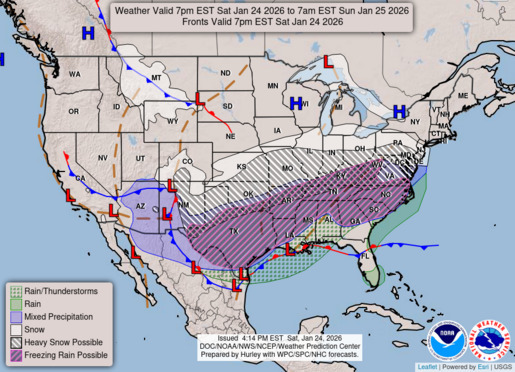
The disastrous storm began on January 23, 2026 as heavy snow, icefall, and winds continued through the 27th. According to the National Weather Service, there were multiple tornadoes, including five simultaneous warnings being issued on January 25th.
The damage throughout this time was massive, much of it being reported at the storm’s peak on the 27th. This included over 110,000 customers without power in Tennessee and over 130,000 in Mississippi, according to the Associated Press. Icy roads contributed to countless car crashes and fallen trees have caused property damage and obstructed paths, limiting travel.
The National Guard has been sent to visit homes to assist with supplies for over 300,000 people across Mississippi to Tennessee have been left without power or means to safely travel as of February 2nd, according to the National Weather Service. On February 24th, up to 1,500 flights had been cancelled, according to ABC news, and in North Carolina, many major airports fell in places where the storm was cause for calling a state of emergency.
The human toll has also been devastating. As of January 30th there have been over 100 deaths and plenty of injuries according to ABC News. This is in part because the South is not built for this sort of heavy snow and ice. Infrastructure is not as robust as it is in the Northeast (where winter storms still have caused large amounts of damage this winter) and Southern residents often are not as aware of all the risks of such low temperatures. Hypothermia has been a major risk also because of the amount of poorly insulated homes left without any power, according to the Associated Press.
Unfortunately, the South has not yet gotten a respite from the damage. Even as many homes are still without power, more winter storms have been forecasted by the National Weather Service. 6-12 inches of snow is expected to fall across the Carolinas, West Virginia, and Western Tennessee. Strong winds and record lows are also expected to hit the already impacted 175 million people in the Southern region.
It seems as if these unusually drastic weather events will continue to affect the South for the foreseeable future.