This review/analysis contains minor spoilers but does not reveal major plots or storylines. Please read forward at your own risk.
It is only six months into 2026, and multiple spectacular groundbreaking releases have shocked both audiences and cinemas all over Hollywood. Obsession (2026) and The Backrooms (2026) were both produced as relatively low-budget films with a powerful cast, and at the same time, presented horror that went against preexisting precedents. However, there is another similarity that is arguably more valuable and feeds into what made these films so unique. All of the mentioned movies featured Gen Z directors* who got their start on none other than Youtube. Their new perspective on Hollywood and passion for filmmaking have truly shone through, and the masses seem to appreciate these new eyes in the industry. The monetary profit of these films has gone through the roof, indicating that audiences support and encourage these new shifts in Hollywood.
Curry Barker is the 26 year old visionary behind Obsession, a movie that proved to be this year’s underdog hit and was so successful that it broke records in the box office. Obsession became the first movie since Steven Spielberg’s E.T. the Extraterrestrial (1982) to have an increase in profit in the second and third weekends, according to The Hollywood Reporter. It was released on May 15th of this year, in the midst of two highly anticipated blockbusters: The Devil Wears Prada 2 (2026) and Star Wars: The Mandalorian and Grogue (2026). Despite this timing, the movie’s popularity grew through word of mouth and high praise from viewers, leading to an undoubtedly successful box office run. Barker’s ability to produce thought-provoking, layered storytelling has been praised by audiences and critics. The Hollywood saying goes, “Comedians make the best horror writers,” which was certainly applicable to this situation. Although extremely intricate, the film was made possible on a $750,000 budget, which is incredibly small compared to the millions it takes to produce the typical blockbuster.
Throughout the film, there are subtle hints to the time period in which it takes place, without making it blatantly obvious. The casual usage of Instagram, generative AI, and Gen Z clothing styles all point to the story occurring in a modern timeline. By not intentionally spelling things out for the audience, Barker has significant recognition for this point. The indication of time has a subtle effect on the characterization and interactions of the characters, bringing attention to issues in modern dating and Gen Z friendships. Along with this, fairly unknown movie stars were cast in the lead parts. Many people online praised this decision as a breath of fresh air from Hollywood’s continuous employment of the same A-list actors.
It’s no surprise that Barker has such a strong understanding of Gen Z representation in the media. After all, the now highly sought after director got his start on YouTube, the platform that raised nearly the entirety of Gen Z since its release in 2005. Barker wrote and directed comedy skits and horror shorts online, gathering massive amounts of attention. Ultimately, his independent film Milk and Serial (2024), which currently sits at 3 million views on YouTube, is what proved to Hollywood that Barker was ready for a larger scale project. This new strategy has been noted by Barker in an interview with NBC, where he states that, “We are finally getting to the point where people are like, okay, fine, I’ll put my film on YouTube. Versus when I was in film school, that was kind of like a last resort.” The ability for new filmmakers to utilize the platform in launching their careers has been immensely helpful, allowing for new creatives to forge their own path in the industry.
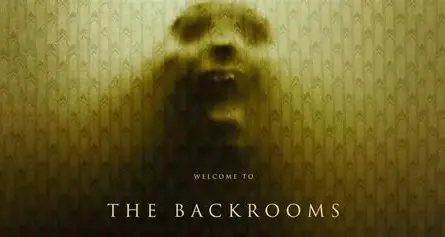
Similarly, breakout director Kane Parsons had an extensive career on YouTube prior to his film debut. Known as his page-named Kane Pixels, Parsons uploaded content on the platform for 8 years, and currently still holds 3.3 million subscribers. In 2022, Parsons uploaded a found-footage short film titled The Backrooms (Found Footage), based off of a popular internet horror legend, also known as a “creepypasta.” Originally based on an image posted on an web forum known as 4Chan, the so-called “Backrooms” began building up a fanbase and lore. Parsons’ original film exploded into an entire web series, which inevitably attracted the attention of Hollywood. James Wan, a notable horror director who has made hits such as Saw (2004) and The Conjuring (2013), reached out to Parsons in order to explore the possibility of expanding his footage into a full length feature film. Parsons was only 16 and still in high school at that time, much to the shock of Wan, but the young filmmaker proved to be a powerhouse at such a young age. Still only 20, Parsons has already directed a highly anticipated blockbuster film for one of the largest distribution companies, A24.
The Backrooms has been A24’s highest grossing movie, accumulating over $200 million globally within just 10 days according to Vanity Fair. The concept of “liminal spaces,” or surreal spaces that feel uncanny, is an example of Gen Z internet horror, a genre that has seemingly officially arrived with the release of The Backrooms. Filled with found-footage feeling shots, rooms that feel familiar to the original content posted online, and a skin-crawling soundtrack, Parsons delivers a strong understanding of what his audience is looking for. The source material of the film can be felt in its haunting atmosphere, leaving space for the dark psychological twists throughout the film.
Beyond the cultural recognition of Gen Z, the film has also been interpreted as an AI allegory. Despite being set in the 90s, the film investigates issues in the cycles of humanity, as well as the concept of remembering and recreating. This theory is likely, as Parsons himself discussed his distaste for generative AI in an interview with CBS News. AI is a question for creatives of this era to solve, and how it will be used in the future of filmmaking is a highly debated topic. The nod to AI, no matter how unintentional, brings in modern perspectives only a person growing up in Gen Z could pick up on.
Seeing the success of both Obsession and The Backrooms all in one month, it seems like Hollywood is prepared to take on the next generation of talent. From YouTube to theaters, these new innovative minds are taking on challenges and breaking through doors into the industry like never before. Both industry professionals and audiences are eager to see what they bring in next.
*Gen Z refers to the generation of people born between 1997-2012.